
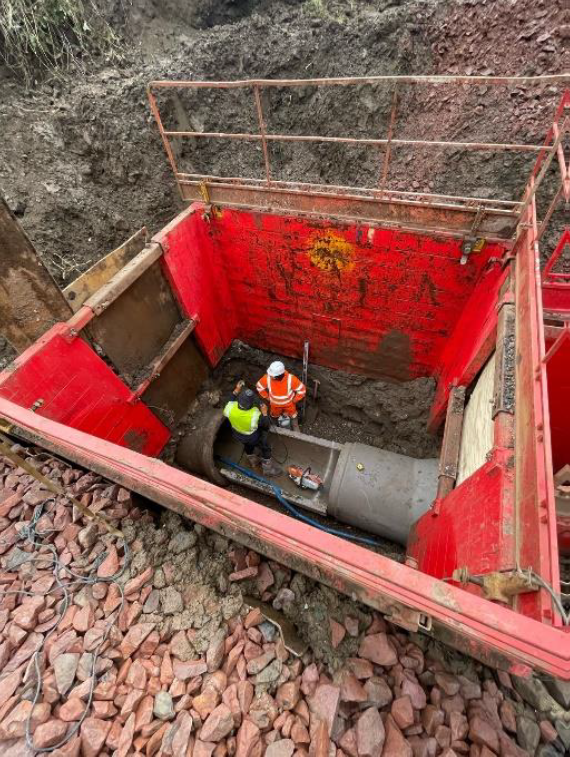
Image: contractors working on a sink hole in a managed development. in Edinburgh.
Read how our team navigated a complex, high-risk repair to restore safety and confidence for homeowners
A significant sinkhole unexpectedly opened on communal land at a factored development we manage in Edinburgh. This created an urgent situation that required immediate action, expert coordination and careful communication with more than 200 homeowners. The collapse was caused by a failure within a historic underground watercourse, leading to unstable ground, property damage and understandable concern for the residents. Our team led the full investigation, stabilisation and long-term repair of the site, working closely with engineers, the local authority and residents. This case study outlines how we managed the incident from the initial emergency response through to full reinstatement and how our transparent and consistent communication helped reassure homeowners every step of the way.
We spoke to Robyn Rae MTPI, who led the remedial works, about what was involved. Robyn is one of our Directors as well as a Board Member of The Property Institute and has over 10 years’ experience in the property factoring industry.
Can you explain a bit about what happened at the development?
Following a period of extremely heavy rainfall, a significant sink hole formed within communal land at the development. We later learned that the issue likely stemmed from a blockage or partial collapse in a 150‑year‑old culverted watercourse running behind the affected properties. When the culvert failed, water escaped and gradually washed away the supporting soil below ground level. Over time, this created a void that eventually gave way, causing a visible collapse at the surface.
One homeowner lost part of their garden and their garden shed, and from the outset it was clear the surrounding area was unstable and continuing to deteriorate. It was an unusual and urgent situation, unlike anything we had previously encountered as factors, and we had to act quickly to make the area safe while gathering accurate technical information to understand the full extent of the problem.
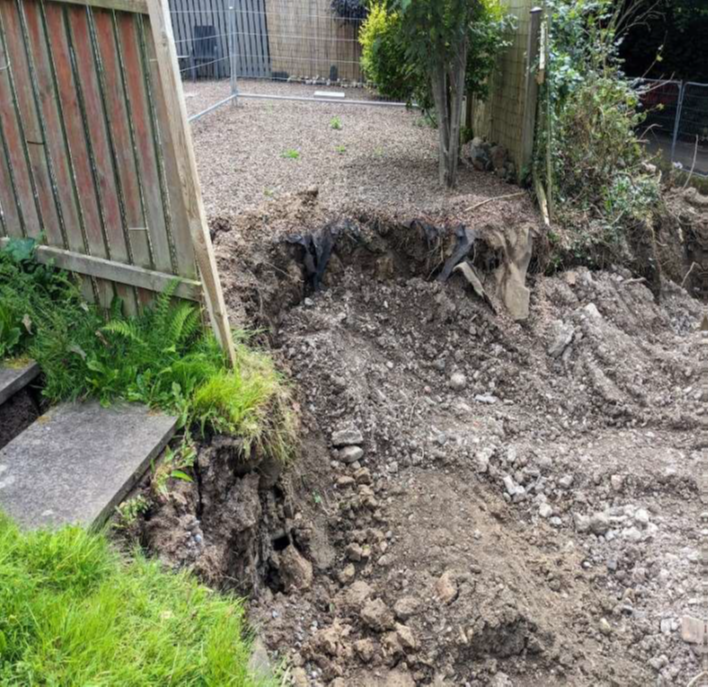
Image: sink hole at a managed development in Edinburgh.
What did you do and how did you reassure homeowners?
Our immediate priority was safety, so we moved quickly to assess the site and put temporary protections in place. At the same time, emotions understandably ran high. Those directly impacted were worried about damage and risk, while others further from the sink hole were anxious about the cost and whether they should be involved in the repairs.
To reassure homeowners, we focused on clear, consistent communication from the very beginning. We acknowledged concerns openly, explained what we knew (and didn’t yet know), and outlined the likely complexity and scale of the works ahead. We emphasised that decisions would be evidence‑based, guided by civil engineers, and aligned with Title Deeds obligations.
We held several large meetings, some with over 200 owners, to give everyone the chance to ask questions directly. Being visible, responsive, and transparent helped build trust during what was, for many, a stressful and unfamiliar situation.
What remedial works were needed?
The works spanned a long period and involved multiple stages:
Creating temporary sandbanks out of hours to prevent further flooding or ground movement.
Stabilising the sink hole through sheet piling and backfilling with granular material.
Commissioning engineer reports, surveys, testing of the remaining culvert, and obtaining specialist legal advice.
Engaging with Scottish Water and Edinburgh Council to understand liability and secure required permissions.
Carrying out tree works with Edinburgh Council approval to allow access and ensure safety.
Sourcing quotes for both the initial safety measures and the full remedial works.
Coordinating the collection of funds from owners.
Overseeing the reinstatement works on site.
Maintaining regular communication with owners and Edinburgh Council throughout the entire process.
It was a complex, multifaceted project involving technical, legal, financial, and community‑management elements, all unfolding under heightened pressure.
How did you keep owners up to date in the two years it took to complete the repair and remedial work?
We put a strong emphasis on proactive communication. Updates were provided at key milestones as well as whenever new information emerged from engineers, contractors, or Edinburgh Council. We shared written updates, held group meetings (both in‑person and virtual where needed), and made sure owners had clear channels to contact us with questions.
Because the works were lengthy and sometimes slow‑moving due to investigations, testing, and approvals, we focused on explaining why each step was necessary. This helped owners understand the dependencies and timelines, and reduced frustration. Maintaining that steady flow of information was essential in keeping everyone aligned and reassured over the two‑year period.
What feedback did you get from the owners when the work was complete?
Once the works were finished, many owners expressed real appreciation for the coordination, persistence, and communication required to deliver such a complex repair. They recognised that it had been a challenging situation for everyone involved, and several commented that they felt supported and kept informed throughout. There was a sense of relief that the estate was safe again and gratitude for the collaborative effort it took to reach that point.
“Robyn Rae is an exemplary factor/ property manager. She took charge of a very difficult multi-party communal repair which required all her great skills and qualities – experience, highly skilled project management, diligence, tenacity, tact, diplomacy, integrity… you name it, she has it! The repair has gone very well, when it could easily have been otherwise in less capable hands. More generally, Charles White Limited have been a delight to deal with – they are also exemplary.”
Incidents like these are thankfully rare but are serious. By sharing this case study, we want to help homeowners understand what to expect during major communal repairs and how Charles White manages complex, high-risk situations.
About Charles White Limited
Based in Edinburgh and working across Scotland, Charles White Limited is one of Scotland’s oldest and most respected property management companies. We have been working in property across Scotland since 1840 and are a well-known, established name in residential property management. We offer an award-winning service built on experience, transparency and full compliance with Scottish regulations. From everyday tasks such as grounds maintenance to the full management of complex residential developments, we take a proactive, people-focused approach. We work hard to ensure our clients always feel informed through regular, clear communication and our commitment to transparent financial management.